
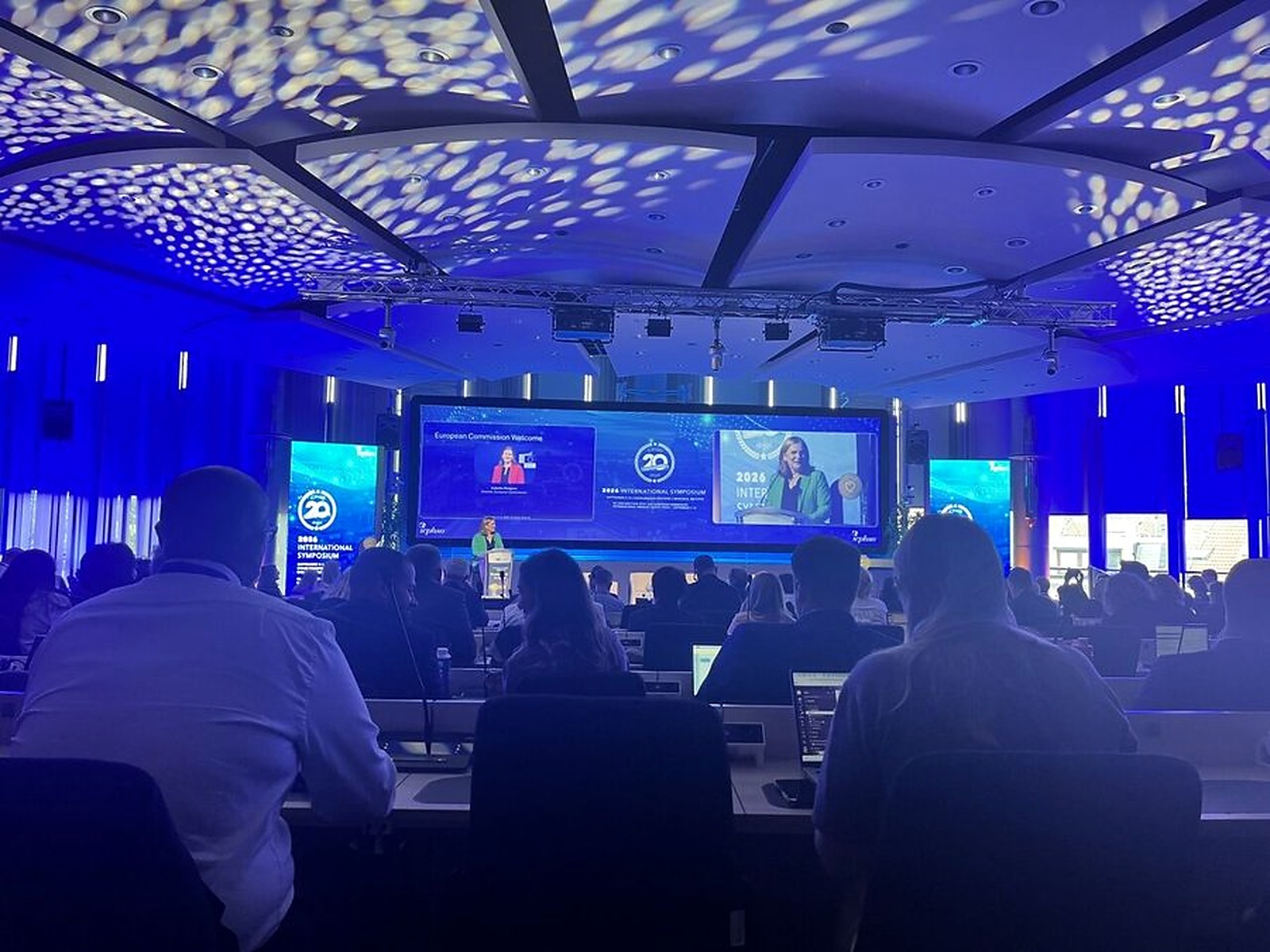
European Commission Welcome session, ICPHSO 2026 International Symposium — Brussels, 9–10 September 2026.
The International Consumer Product Health and Safety Organization held its 2026 International Symposium in Brussels on 9–10 September, timed deliberately to close out the European Commission's International Product Safety Week — itself marking its 20th anniversary this year under the theme "Product Safety in Motion." ICPHSO's own symposium theme, "Advancing a Global Baseline for Product Safety," set the tone for two days of sessions that, read together, point to a specific and consequential shift: product safety enforcement is moving from a collection of national systems toward something more centralised, more data-driven, and considerably less forgiving of a compliance file that hasn't been touched since a product first launched.
The clearest signal came in the sessions on enforcement evolution. In the UK, regulators previewed proposals for a new single enforcement toolkit alongside novel penalty regimes — a consolidation that replaces a patchwork of overlapping powers with something more unified and, notably, more consistently applied. In the EU, the direction of travel is similar: centralised enforcement mechanisms and tools like the EU Customs Data Hub were discussed specifically in terms of how they reshape compliance for businesses operating across multiple member states at once, rather than navigating each market's enforcement separately. For buyers used to treating compliance as a country-by-country checklist, the sessions were a clear signal that the checklist itself is being redesigned around cross-border visibility.
A second theme ran through the programme with less fanfare but arguably more direct relevance to sourcing and QA teams: the extension of product liability and safety obligations into areas that wouldn't have been considered part of "product safety" a few years ago. A dedicated session addressed social media and gaming-adjacent behavioural patterns under the new EU Product Liability Directive, examining what manufacturer obligations look like when a product's risk profile is shaped as much by how it's marketed and used online as by its physical construction. Another session, framed around the provocative title "From Compliance to Claims," walked through how product safety, enforcement, and liability now interact across the EU and US as connected rather than separate risks — a compliance gap in one jurisdiction increasingly informing a liability claim pursued in another.
The Global Regulator Session brought senior product safety regulators from multiple jurisdictions together to compare enforcement priorities directly, rather than presenting parallel national updates in isolation. The throughline across their remarks, reported consistently across coverage of the session, was less about any single new rule and more about a shared expectation: regulators across markets are increasingly comparing notes with each other, which means a compliance approach that works by staying just inside the letter of one country's rules is a weaker strategy than it used to be, if enforcement bodies are actively sharing information about which companies and product categories draw scrutiny.
For QA and sourcing teams, the practical read on all of this is less about any single new regulation to add to a checklist and more about a shift in what evidence actually needs to look like going forward. A one-time test report, filed and forgotten once a product clears initial compliance, was always a thinner form of protection than it felt like at the time. In an enforcement environment moving toward cross-border data-sharing and centralised customs visibility, the gap between a product that was tested once at launch and a product with an ongoing, documented verification history is exactly the kind of gap regulators are now better positioned to notice.
None of this is cause for alarm so much as a reason to treat the direction of travel as more than background noise. Brussels made the argument this year that product safety regulation is becoming more joined-up, not less — across enforcement bodies, across the Atlantic, and across the gap between physical product risk and the newer, less physical risks regulators are now willing to treat as part of the same conversation. Buyers building or reviewing a compliance programme this year have a clear cue from the sessions: the baseline being advanced in Brussels is one where continuous, documented verification is the expectation, not a one-time certificate.
Want the monthly version of insights like this? Subscribe to QIV Insight.