A Monthly Quality Briefing
Created & Published by QIV Global
Headline stat · This month’s QIV Insight

Global Beyond-AQL Rate Falls to 14.9% — a New Insight Low

The share of inspected shipments failing their agreed Acceptable Quality Limit dropped by two full percentage points in a month — the sharpest month-on-month improvement since we began tracking the Insight.

14.9%
▼ 2.0 ptsfrom 16.9% last month
16.9%Last month
−11.8%Relative improvement
8.0%Lowest · Turkey
18.4%Highest · Bangladesh

14.9% of shipments inspected across our tracked sourcing regions this month fell outside the agreed AQL. Three of the five hubs in our snapshot — Turkey, Vietnam and China — are now running below the global rate, while Bangladesh (18.4%) and India (16.0%) remain above it. The spread between the best- and worst-performing hub is more than ten percentage points.

What it means for buyers

  • One month is a signal, not a trend. Hold your current inspection frequency until the improvement repeats.
  • Watch the gap between hubs. In above-average regions, pair a During Production Inspection with the Final Random Inspection to catch defects while they can still be fixed.
  • Use the low rate to reward suppliers. Consistently strong suppliers may qualify for reduced sampling under the 2026 update to ISO 2859-1.
How the Insight is calculated
Event reports
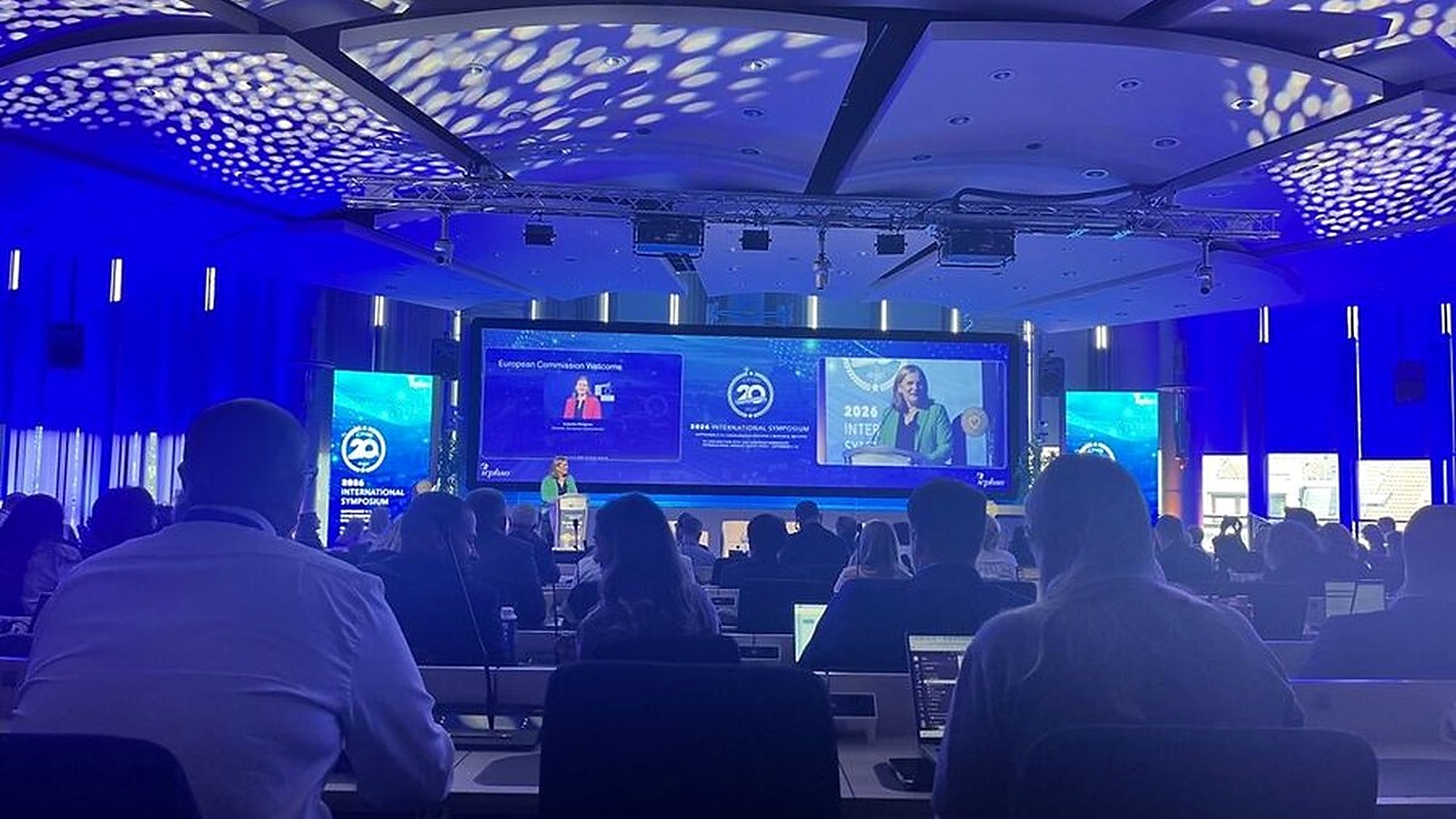
European Commission Welcome session at the ICPHSO 2026 International Symposium, Brussels
Brussels · 9–10 September 2026

Key takeaways from the ICPHSO International Symposium

ICPHSO’s 2026 International Symposium closed out the European Commission’s International Product Safety Week, now in its 20th year. The message from regulators was consistent: enforcement in the UK and EU is centralising, product liability is extending beyond physical defects, and a one-time test report is a thinner defence than it used to be.

Discover more
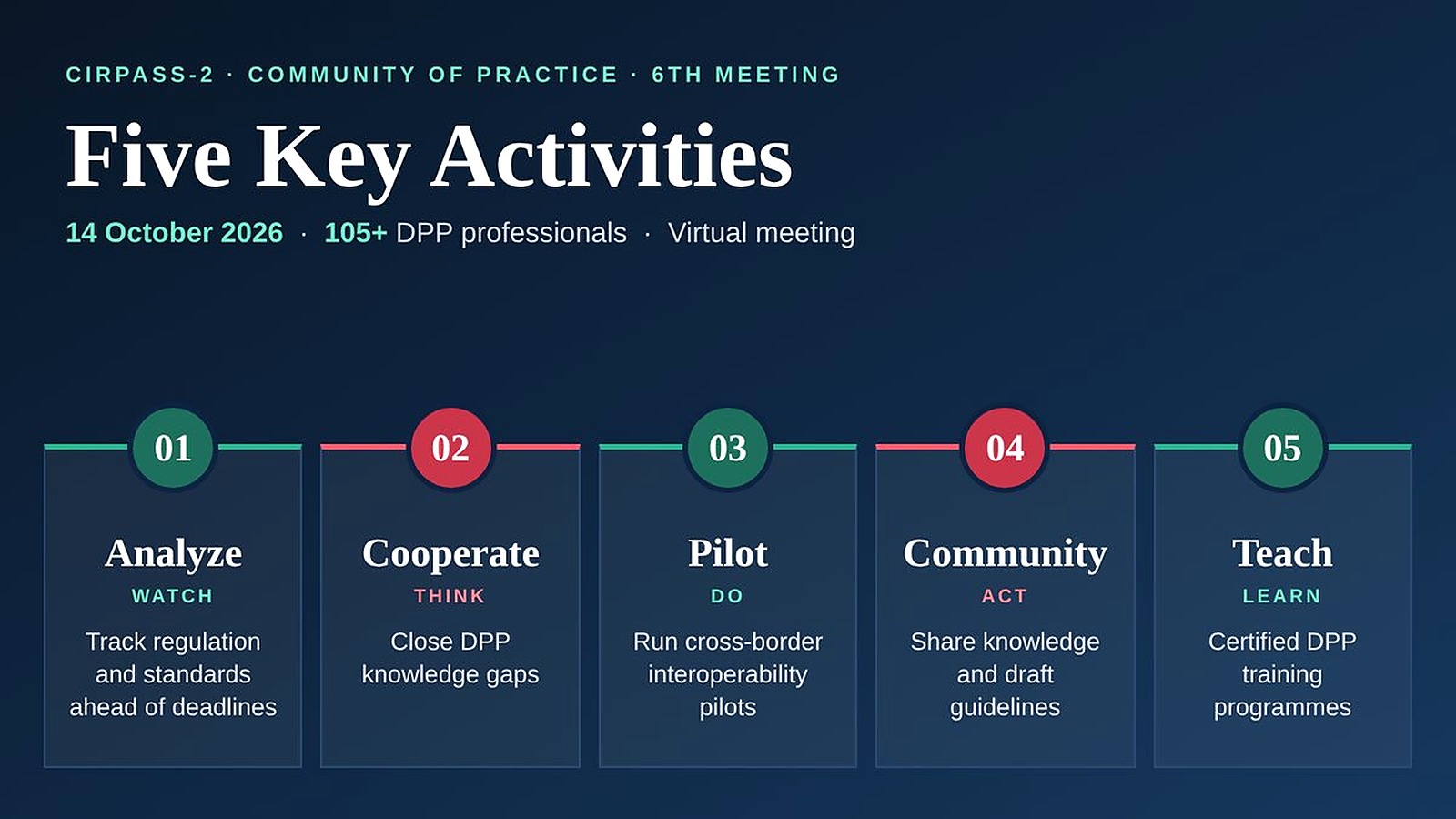
CIRPASS-2 Community of Practice, 6th meeting, 14 October 2026 — Five Key Activities: Analyze, Cooperate, Pilot, Community, Teach
Virtual · 14 October 2026

105+ DPP professionals meet at the CIRPASS-2 Community of Practice

More than 105 Digital Product Passport professionals joined the sixth virtual meeting of the CIRPASS-2 Community of Practice. The agenda set out five activity streams — Watch, Think, Do, Act, Learn — from tracking regulation to cross-border interoperability pilots and certified training. QIV Global was among the participants.

Discover more
Also on the event calendar

RAIN in Action 2026  ·  September 29–October 1  |  Madrid — further event coverage to follow.

Insights library

Key insights for QA and sourcing professionals

Regulation, sourcing-country trends, industry standards, quality methodology and platform updates — organised by topic.

Sourcing TrendsCompliance & RegulationQuality MethodologyIndustry StandardsPlatform & Technology

Compliance & Regulation

7 articles

Event report

105+ DPP professionals meet at the CIRPASS-2 Community of Practice

On 14 October 2026, more than 105 Digital Product Passport (DPP) professionals joined a virtual meeting organised by CIRPASS-2 — the sixth gathering of its Community of Practice (CoP). CIRPASS-2 is the EU-funded project, running from 2024 to April 2027 under the Digital Europe Programme, that is preparing the ground for the Digital Product Passport required under the EU's Ecodesign for Sustainable Products Regulation, including pilots across several product sectors. QIV Global was among the participants.

Compliance & Regulation

Key takeaways from the ICPHSO International Symposium — Brussels

The International Consumer Product Health and Safety Organization held its 2026 International Symposium in Brussels on 9–10 September, timed deliberately to close out the European Commission's International Product Safety Week — itself marking its 20th anniversary this year under the theme "Product Safety in Motion." ICPHSO's own symposium theme, "Advancing a Global Baseline for Product Safety," set the tone for two days of sessions that, read together, point to a specific and consequential shift: product safety enforcement is moving from a collection of national systems toward something more centralised, more data-driven, and considerably less forgiving of a compliance file that hasn't been touched since a product first launched.

Compliance & Regulation

Product Recall Summary: September 2026

The US Consumer Product Safety Commission had logged 459 recalls in 2026 as of late September, 202 of them in the preceding 120 days. Coverage usually focuses on the hazard and the remedy. A more useful question for buyers and QA teams: would a standard pre-shipment inspection have caught this? For several September recalls, the answer is clearly yes. Multiple mattress recalls — from separate suppliers under different brands — cited the same root cause: failure to meet the mandatory federal flammability standard.

Compliance watch

Brussels publishes its Forced Labour Regulation guidelines

The European Commission has published its long-awaited guidelines for the EU Forced Labour Regulation, clarifying how investigations and enforcement will work ahead of the rule's full effect in December 2027. The guidance signals that authorities will expect documented, multi-tier due diligence — audits, risk assessments and supply chain maps — not policy statements alone. That distinction matters more than it might first appear.

Regulation spotlight

How the EU's Digital Product Passport will reshape fashion sourcing

The EU's Ecodesign for Sustainable Products Regulation (ESPR) reached full application in July 2026, when the EU's central Digital Product Passport Registry went live. That's the infrastructure switch-on, not yet a product obligation — the first category with a fixed, legally binding date is batteries: from 18 February 2027, large batteries require a passport under separate EU battery legislation.

Social compliance

What a SMETA audit actually measures

SMETA (Sedex Members Ethical Trade Audit) is a methodology, not a certification — the report gets shared through the Sedex platform rather than issued as a pass/fail badge. A 2-pillar audit covers Labour Standards and Health & Safety, the two mandatory areas for any SMETA engagement. A 4-pillar audit adds Environment and Business Ethics, and is increasingly what major global buyers require as a pre-qualification condition, not an optional extra.

Compliance watch

REACH and CPSIA: the chemical compliance basics buyers skip

REACH (Registration, Evaluation, Authorisation and Restriction of Chemicals) governs any product entering the EU market, restricting or requiring authorisation for substances of very high concern — phthalates, certain flame retardants, and heavy metals among them. CPSIA is the US equivalent for children's products specifically, mandating third-party lab testing by a CPSC-accepted facility before a product can legally enter the US market for anyone under 12.

Quality Methodology

14 articles

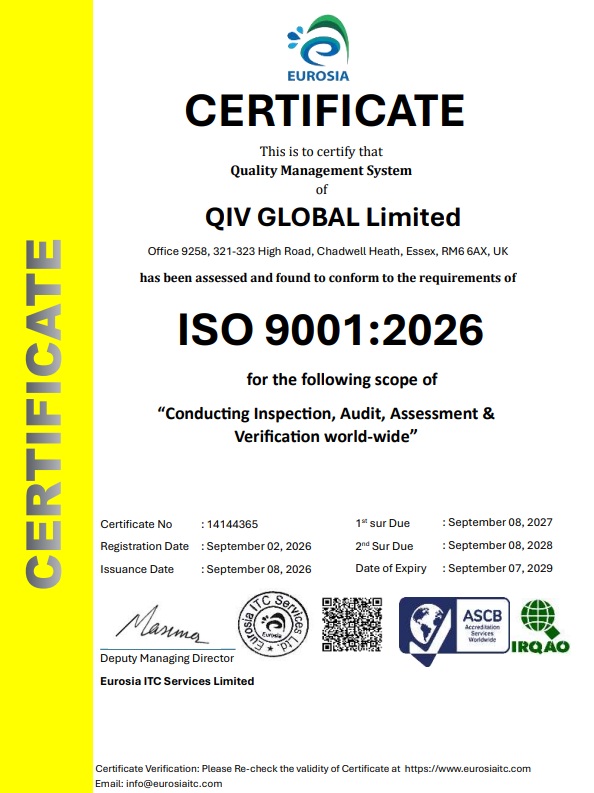
ISO 9001:2026 certificate supplied for QIV Global Limited
Quality methodology

QIV Global Limited obtains ISO 9001:2026 certification

The certificate supplied to QIV INSIGHT names QIV Global Limited and states a quality-management-system scope covering inspection, audit, assessment and verification worldwide. Readers making procurement decisions should verify the certificate number, scope and current status with the issuing body.

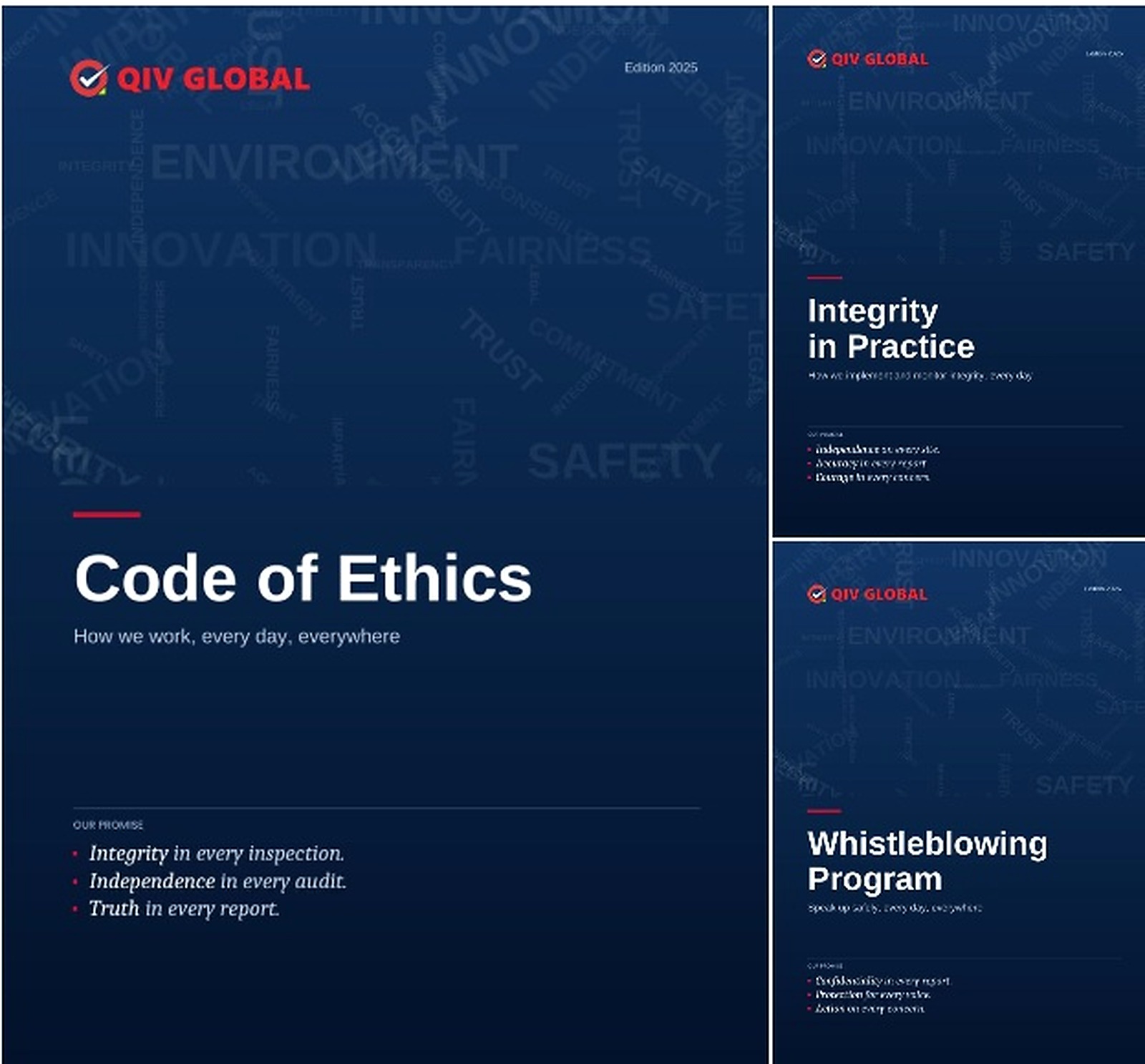
QIV Global Code of Ethics cover and integrity commitments
Ethics & independence

How QIV Global manages integrity in inspection and audit

Independence, transparent evidence, accountability, fairness and a speak-up culture support credible inspection and audit outcomes.

Quality methodology

ISO 9001:2026 has arrived — what actually changed

ISO published the sixth edition of ISO 9001 on 16 September 2026, the first substantive revision since 2015. The standard remains built on the same Harmonized Structure that lets it slot alongside ISO 14001 and ISO 45001 in an integrated management system, so the update is evolutionary rather than a rebuild — but several of the changes are worth a supplier's attention regardless.

Quality inspection

ISO 2859-1 gets its 2026 update

The international standard behind AQL-based sampling — the same framework our Index methodology draws on — has been revised for 2026. The new edition introduces skip-lot sampling, allowing consistently high-performing suppliers to move to reduced inspection frequency without lowering the bar on defect tolerance. In practice, that means a factory with a strong, sustained track record of passing inspection can qualify for lighter sampling on future shipments, while any lot that falls outside the agreed Acceptable Quality Limit resets that clock.

Quality methodology

How a supplier verification audit works, step by step

A supplier verification audit answers a question no single inspection can: is this factory capable of making the product consistently, and does it operate the way it says it does? Inspection looks at output. An audit looks at the system that produces it. It begins with scoping. Buyer and auditor agree what is covered — quality management, production capability, social compliance, or a combination — and the factory supplies documents in advance: organisation chart, process flow, quality procedures, training records, earlier audit reports and key supplier lists.

Methodology

A Final Random Inspection is only as good as its timing

A Final Random Inspection (FRI) is meant to be the last checkpoint before a shipment leaves the factory — valid once production is 100% complete and at least 80% of goods are packed, so the sample actually reflects what is going into the containers, not an early batch pulled out to make a good impression. Run it too soon, and the report describes a shipment that doesn't exist yet.

Quality methodology

What a Pre-Production Inspection catches that a Final Inspection can't

A Pre-Production Inspection (PPI) happens before mass production starts — checking raw materials, components, and initial samples against the approved specification while there is still time to correct a problem cheaply. Verifying fabric composition, hardware quality, color matching against an approved standard, and initial construction methods at this stage catches issues that, if left until final inspection, mean an entire production run has already been made incorrectly.

Quality methodology

How CAPA actually closes a finding, not just logs it

Corrective and Preventive Action (CAPA) sounds procedural, but the distinction inside the name is the entire point: a corrective action fixes what already went wrong; a preventive action stops it from recurring. An audit or inspection finding that only produces the first without the second tends to reappear on the next visit, sometimes with different wording but the same root cause.

Quality philosophy

Why verification still matters when your supplier is already ISO 9001 certified

A quality management certificate proves a supplier's system is well designed — documented processes, defined responsibilities, a plan for continuous improvement. It does not prove that one specific shipment, on one specific day, actually met that plan. Those are two different questions: “is the process capable?” and “did this batch meet it?” Only independent, on-the-ground verification answers the second one.

Quality philosophy

Why buyers still bring in a second inspection company

It's a fair question, and the honest answer is: sometimes you don't need a second independent inspection capability. If an existing provider has a strong track record, consistent findings, and nothing about the relationship raises concern, adding another layer is often just added cost without added insight. Where a second, independent view earns its cost is more specific: when a supplier is critical enough that a quality failure would be genuinely damaging, when a quality problem keeps recurring despite an existing provider's sign-off, when sourcing shifts into a new country your current provider doesn't cover as deeply, when a shipment's value is high enough that the cost of being wrong far exceeds the cost of checking, when findings from your existing provider have been inconsistent, or when you simply want a second, disinterested opinion on something material.

Quality methodology

A factory can look good and still carry risk

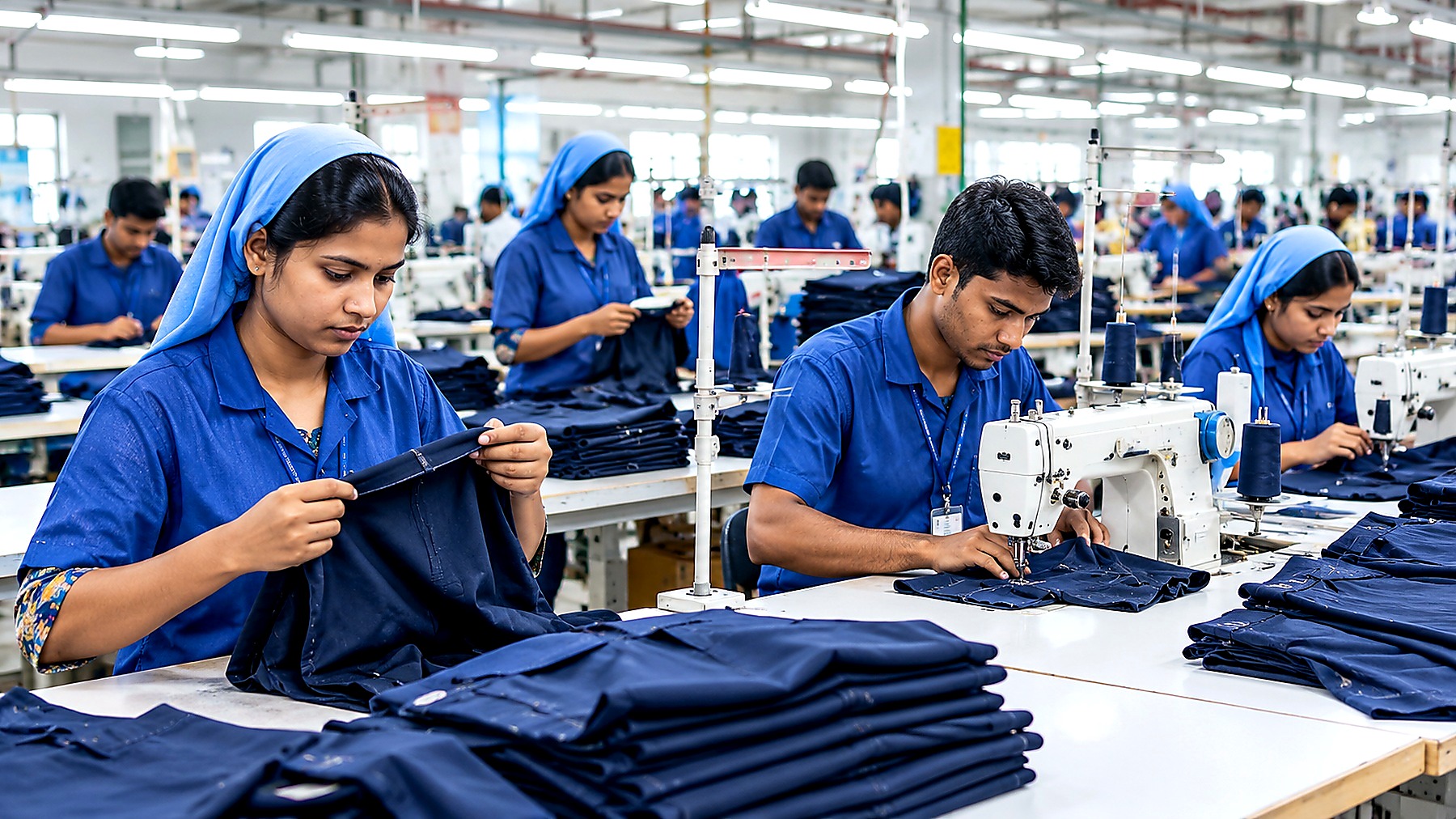
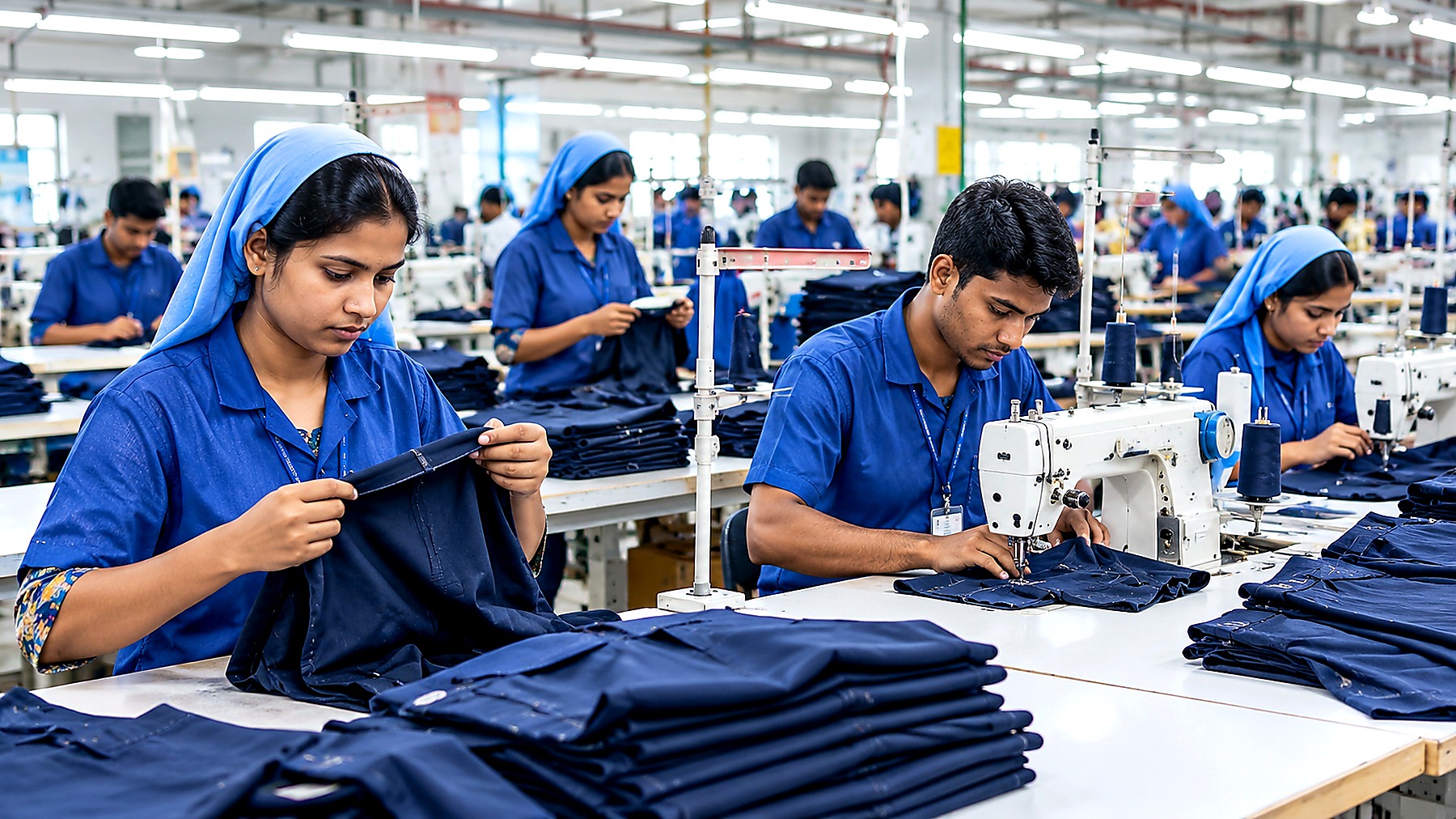
A clean, well-lit factory floor with organised workstations creates a strong first impression — and it's also the part of a facility every supplier knows a visiting buyer or inspector will see. It is not, on its own, evidence of reliable production quality. Showroom-ready and process-capable are two different things, and the gap between them is exactly where supply risk tends to hide.

Quality methodology

The inspection report is not the whole quality story

A final inspection answers one specific question well: did this shipment meet the agreed specification, on the day it was checked. What it does not capture, by design, is everything upstream that produced that result — the supplier's process discipline, raw material consistency, in-process controls, and whether the same conditions will hold for the next production run. That gap matters most for buyers relying on inspection reports as their only signal of supplier reliability.

Quality methodology

Why the same defect keeps coming back

When the same defect shows up across consecutive shipments from the same supplier, the instinctive response is often more inspection — tighter sampling, additional sorting, more rework before goods ship. That response manages the immediate problem, but it doesn't explain why the defect keeps recurring in the first place. A defect that repeats is rarely a one-off mistake; it's usually a signal that something upstream — a machine setting, a material substitution, a training gap, a process step being skipped under schedule pressure — is producing it consistently.

Inspection standards

Handicrafts don't grade on the same scale as machine-made goods

The variation that gives a handwoven basket or a hand-thrown ceramic its character is exactly what makes standard defect logic hard to apply directly. A grain difference or a slight asymmetry isn't automatically a defect — it may just be the product doing what handmade products do. The fix isn't lowering the bar; it's setting it correctly before the inspector ever arrives, using multiple reference samples that show the accepted range of natural variation, agreed with the buyer in advance, rather than a single “golden sample” that no real production run can consistently match.

Quality philosophy

What to consider before developing your own internal test laboratory

For a buyer or brand reaching meaningful volume in a category, the question of building an internal test laboratory eventually arises. It is a legitimate option, not just a cost-cutting impulse, but the decision carries more structural weight than the initial cost estimate suggests. Accreditation comes first. A lab accredited to ISO/IEC 17025 can produce results recognised by retailers, regulators and customers.

Industry Standards

14 articles

Industry standards

Toys & kids products: what inspection actually needs to cover

Toy and children's product quality is often discussed in terms of laboratory testing — EN71, ASTM F963, chemical and mechanical test reports. But for a buyer managing a live production order, the inspection that actually protects a shipment happens on the factory floor and at the carton level, not in a lab days or weeks earlier. A supplier's test reports confirm the design passed, once, on a sample. Inspection confirms the specific batch being shipped was built the way that sample was.

Industry standards

How to conduct a Final Review Inspection for sofa quality

A sofa is one of the more deceptive categories for inspection, because most of what determines its durability is built into a frame the buyer never sees again once upholstery is applied. By the time a Final Random Inspection happens the frame is enclosed, so the inspection has to work from structural checks and indirect evidence rather than a direct look at the part most likely to fail.

Industry standards

Consumer electronics: what a final inspection actually checks

For consumer electronics, the Final Random Inspection is a matching exercise. The product has been designed, approved and usually certified. The inspector confirms that the units packed for shipment are the same product — same build, markings and accessories — and that nothing has drifted from the approved sample. The first pass is visual: housing finish, colour against the approved sample, gaps, button and port alignment, label legibility. Equally important are identification and regulatory markings — certification marks, rating labels, model and serial identification, country of origin.

Industry standards

Gifts and handicrafts: a final inspection checklist built for variation

Gifts, crafts and decorative items are produced in volume, yet many are made partly by hand, so natural variation is built in. A checklist borrowed from a machine-made category will reject good product or wave through bad. The fix is to build the standard around variation, and agree it in advance. That starts with reference samples — plural. A single golden sample cannot represent a handmade range.

Industry standards

Footwear and leather goods: what inspection actually measures

A shoe, a travel bag and a laptop sleeve all share the same underlying inspection question: does the material and construction survive real use, not just a showroom handling. For footwear, the reference tests are specific and mechanical — outsole flex resistance (repeated flexing until cracking occurs), abrasion resistance measured against a control rubber compound, and water penetration testing, commonly run via the Maeser or Bally penetrometer methods, since a boot that looks waterproof and one that tests waterproof are not automatically the same thing.

Industry standards

Genuine leather, split leather, or something else — verifying what's actually in the shipment

"Leather" covers a wide range of actual material quality, and the difference matters commercially as much as it matters for compliance: full-grain and top-grain leather, split leather (the lower layers separated from a hide during processing, often bonded or coated to resemble the top layer), and bonded leather (leftover leather fibres bound with adhesive onto a fabric backing) can all reasonably be described as "leather" on a spec sheet while representing very different costs and durability profiles.

Industry standards

Why CE marking alone isn't a QC plan for machinery

Industrial, gardening, construction and cleaning machinery sold into the EU generally requires CE marking under the Machinery Directive — a manufacturer's declaration that the design meets essential health and safety requirements, often backed by a Declaration of Conformity and, for higher-risk equipment, third-party type examination. That declaration certifies the design. It does not, on its own, confirm that a specific shipped unit was actually built to that design, with the correct guarding, labelling and safety interlocks physically in place.

Commodity spotlight

What actually separates specialty coffee from the rest of the world's crop

Green coffee is graded twice before it ever reaches a cup. The first pass is physical: a 350-gram sample is checked by hand, and the protocol allows zero primary defects and no more than five secondary defects. A lot that fails this stage never makes it to the tasting table at all. The lots that pass move to cupping, where certified graders score aroma, flavour, body, acidity and balance on a 100-point scale — anything below 80 does not qualify as specialty grade, regardless of where it was grown or which variety it is.

Commodity spotlight

Shrimp: the grading system exporters don't explain

Frozen shrimp is graded and sold by count — the number of pieces per pound or per kilo, expressed as a range such as "16/20" (16 to 20 shrimp per pound). US grading tolerance allows the actual count to vary by no more than about 10% from the labelled figure; a "16/20" pack should contain no fewer than roughly 14 and no more than 22 pieces per pound.

Industry standards

Jute grading: why "TD1" and "TD8" describe two different products

Jute is graded on a scale that runs from TD1 (top grade: long, strong, golden-coloured fibre) down through TD8 (the lowest usable grade), based on six physical characteristics — fibre length, strength, colour, fineness, root content and luster. Two of those factors, colour and bulk density, are still assessed subjectively by trained graders using a traditional "hand and eye" method rather than an instrument reading, which means grading consistency depends heavily on the specific grader's judgment, not just a fixed numerical threshold.

Industry standards

Cosmetics and personal care: what buyers actually need to check

Cosmetics and personal care inspection starts from a different premise than most consumer goods: the product is intended for direct, repeated contact with skin, hair, or in some cases mucous membranes, which raises the stakes on ingredient verification and contamination control well above a typical hardline or softline QC checklist. Formulation compliance — confirming restricted or banned ingredients aren't present, and that concentration limits on permitted ingredients are respected — varies meaningfully by destination market, and a formula compliant for one region can fail another's restricted-substances list entirely.

Industry standards

Watches, clocks and precision timepieces: an overlooked hardgoods category

Watches and clocks sit awkwardly between categories: too mechanically precise for a standard hardgoods checklist, too different from electronics to fit that category cleanly either. Movement accuracy testing — checking whether a watch gains or loses time within its rated tolerance over a set period — is specific to this category and easy to skip entirely if an inspector is working from a generic checklist rather than one built for timepieces.

Industry standards

What EN71 and ASTM F963 actually test for

EN71 governs the EU market and ties into CE marking; ASTM F963 is the mandatory US standard, enforced by the Consumer Product Safety Commission, with CPSIA layered on top requiring third-party testing by a CPSC-accepted lab. Both cover mechanical and physical safety, flammability, and restricted chemicals, but they are not interchangeable — a toy cleared for the EU is not automatically compliant for the US, and vice versa.

Industry standards

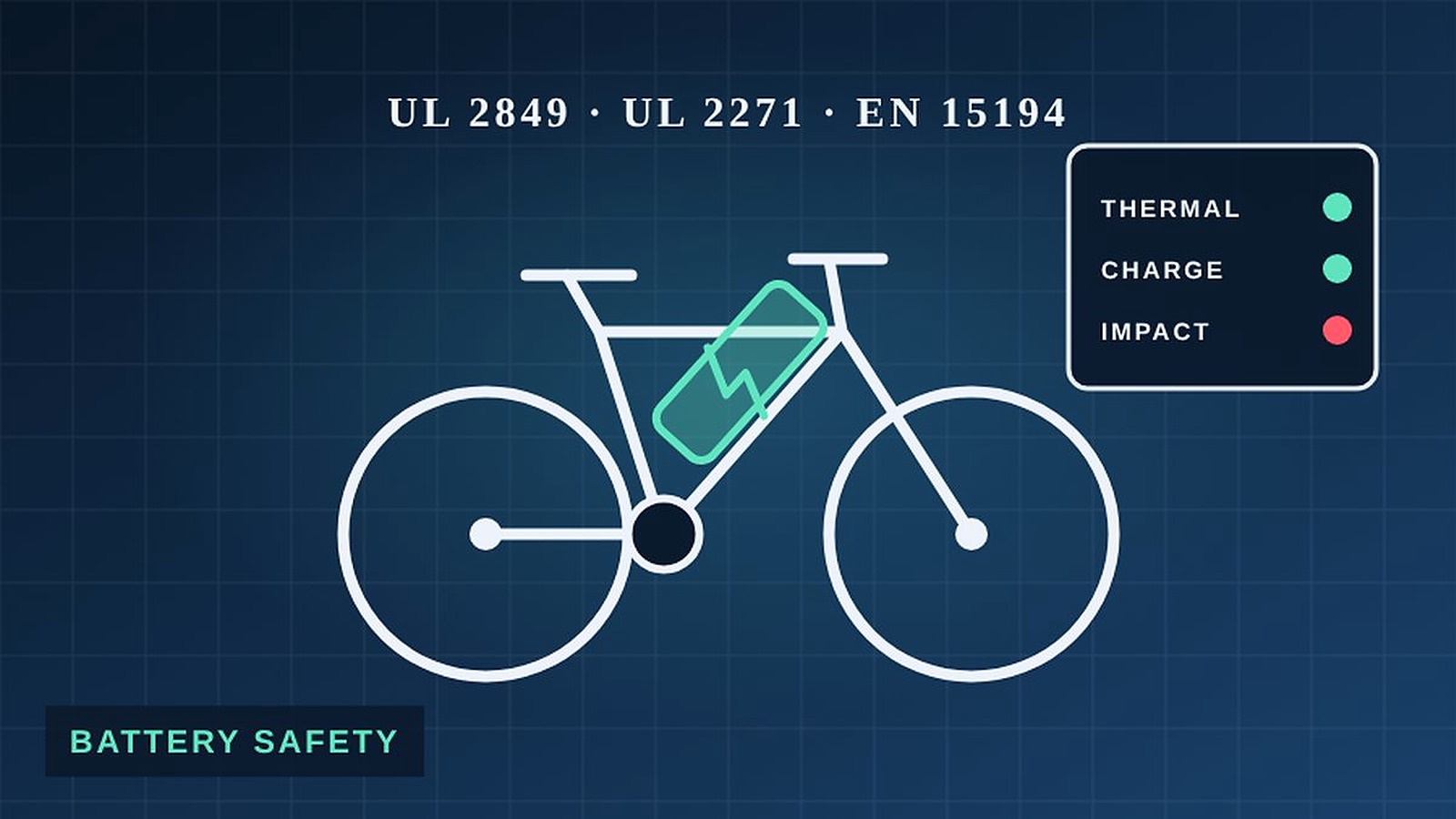
The e-bike battery standard every buyer should ask about

UL 2271 is battery-pack specific: it tests a lithium-ion pack's resistance to overcharge, short circuit, extreme temperature, impact and crushing — the failure modes behind thermal runaway. UL 2849 goes further, assessing whether the battery, charger, motor controller and wiring actually work together safely as a complete electrical system. A battery can hold a valid UL 2271 listing while the e-bike it's installed in has never been evaluated to UL 2849 at all.

Platform & Technology

3 articles

Platform & technology

A quality-and-compliance platform just raised growth capital — what it signals

Resurgens Technology Partners, a software-focused private equity firm, announced a growth-stage investment in Qarma, a quality and compliance platform used across fashion, furniture and toy supply chains, on 13 August 2026. The amount was not disclosed, but the stated use of capital was specific: accelerating Qarma's AI roadmap and expanding its go-to-market effort beyond the US. What matters to buyers is the signal about where quality-and-compliance software is heading.

Platform & technology

Why every inspection record needs its own audit trail

An inspection report is only as useful as a buyer's confidence that it reflects what the inspector actually found, unedited, at the time of the visit. A static PDF report, however professionally formatted, carries no inherent proof of that — it can be regenerated, amended, or quietly reissued without an obvious record that anything changed.

Platform & technology

Remote inspection: what it can and can't replace

Remote and digital-assisted inspection — live video walkthroughs, digital checklists, real-time photo and data capture — has become a genuinely useful layer on top of in-person inspection, not just a pandemic-era substitute. It works especially well for routine monitoring between full inspections, for factories with an established track record, and for quick verification of specific, narrow concerns that don't require a full physical presence.

Get these monthly, before they're posted here

Subscribe to the QIV Insight